For the past year, I’ve been thinking about the intersection of celebrity culture and advocacy, especially in this moment of moral urgency regarding immigration. If, when, and how public figures would step into that urgency felt like an open question. On February 1, 2026, during the 68th Annual Grammy Awards, I got part of my answer. Music’s biggest night became something more than a celebration. It became a cultural flashpoint. It was a reminder that visibility is power, and that silence is also a choice.
In the words of Dr. Martin Luther King, Jr., “Our lives begin to end the day we become silent about things that matter.”
For immigrant families watching the Grammys at home, this was not just entertainment; it was recognition. A clear signal that their lives and fears are not invisible. But at the same time, this moment raised several questions for me.
Despite the visibility of the moment, I still had concerns
When influential artists use their platforms to speak, the impact is undeniable. Yet when others, especially those with unmatched global reach, remain quiet on immigration at a time when widespread harm and enforcement operations are being carried out, people notice.
Currently, there are brands, celebrities, influencers, and pop stars who remain silent during a time when “collective, universal harm” is happening. To me, this feels like a missed moral opportunity. It feels like a choice that communicates indifference or complete detachment.
I’m not saying that they must speak on every issue. Still, I am reflecting on how much their voices could shift culture, shape conversation, and foster compassion for what is happening.
As Shandy Anway, a licensed marriage and family therapist based in California and owner of ESA Counseling Services, said, “Neutrality is one of those things that really requires a distance from harm. You can afford not to engage.”
It’s a way of people saying, “I’m not at risk” and “I don’t have to feel this.” Neutrality is a privilege not afforded to everyone.
Policy is personal and not something abstract
For immigrant families coping with confrontation at multiple levels, it can feel unsettling to watch someone talking about their latest clothing haul or travel post. At the same time, children are detained without parents, neighbors are arrested without cause, and communities live in fear.
As the daughter of Chilean immigrants who fled dictator Augusto Pinochet’s regime, immigration policy has never been an abstract subject for me. My parents lived with the uncertainty of being undocumented before becoming citizens in the late 1980s. For families like mine, the stakes are deeply human: intimate, daily, and always terrifying.
The fear of the phone call you don’t want to answer. The knock at the door you hope never comes and the quiet calculations about where it’s “safe” to go. You’re told to speak English not just to be heard but to be seen as worthy of safety. These moments matter just as much as the moments on a Grammy stage.
Artists proved that collective advocacy can be powerful
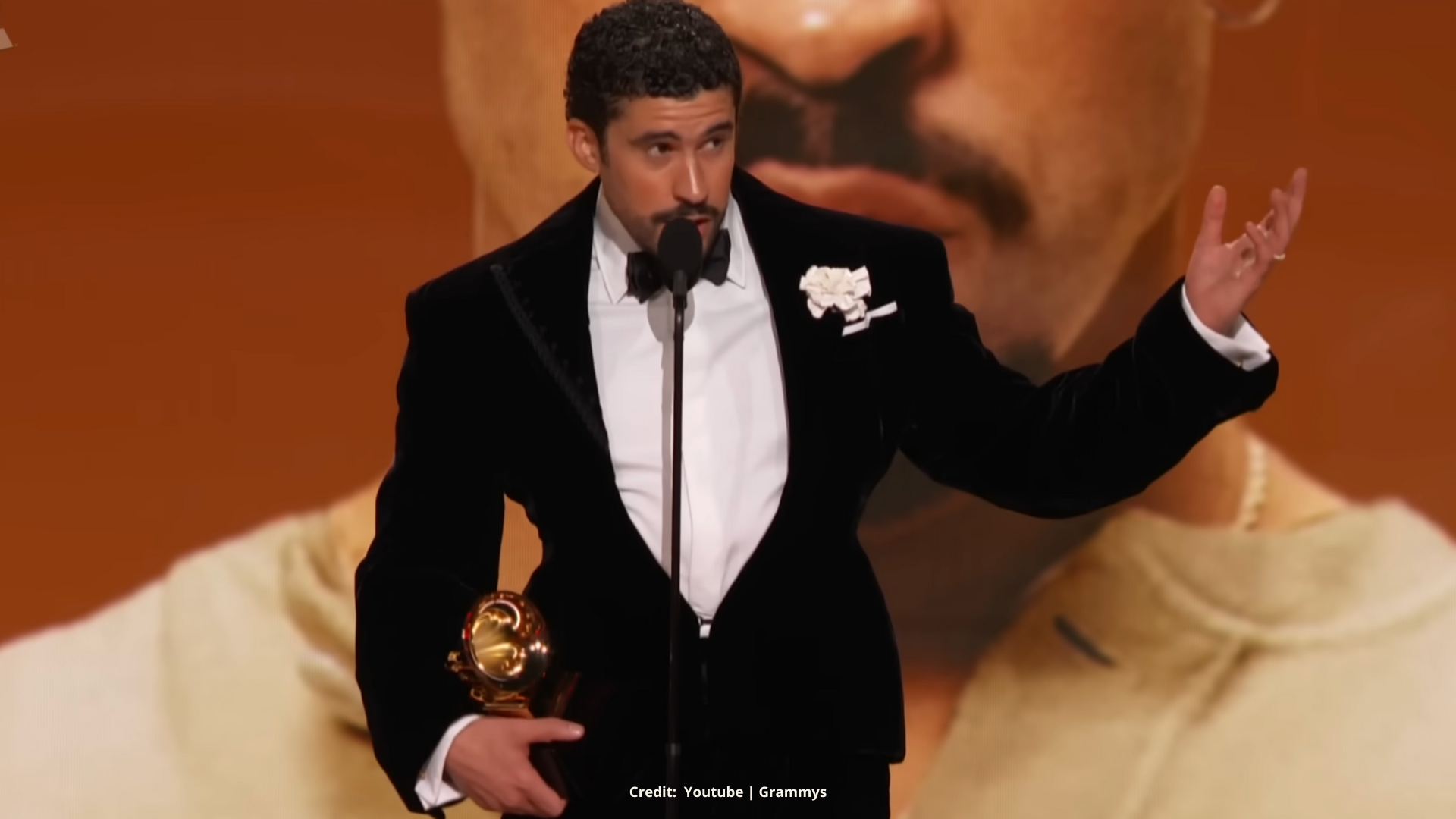
During this year’s Grammys, multiple artists made direct statements in support of immigrants. Bad Bunny opened his acceptance speech with “ICE out.” Then, he reaffirmed, “We’re not savage. We’re not animals. We’re not aliens. We are humans.”
For millions watching, this was a powerful affirmation of dignity on a global stage. Others, including Olivia Dean, Kehlani, Carole King, Justin and Hailey Bieber, and Becky G, echoed similar sentiments through speeches, pins, and symbolic messaging.
If this felt coordinated, it was. Activists worked behind the scenes with artist teams, distributing “ICE OUT” pins and aligning messaging. What unfolded wasn’t random. It was an organized cultural resistance that dominated both the ceremony and the news cycle.
It came at a time of urgency, as enforcement operations and fatal encounters involving federal agents continue to sow fear and grief in immigrant communities.
The reality on the ground for so many is laced with fear
The number of detainees in the United States’ Immigration and Customs Enforcement (ICE) custody has reached a new record high, surpassing 70,000 for the first time in the deportation agency’s 23-year history, according to data obtained by CBS News.
The data also cites that roughly 47% (or about 34,000) of ICE’s detainees had criminal charges or convictions. The numbers do not clarify details on the severity of those records, so they could range from felonies to misdemeanors to immigration-related offenses.
Human rights organizations have documented widespread due-process concerns. They’ve cited instances of people being apprehended without access to counsel and of inadequate notice of court dates.
“The Trump administration’s use of federal prisons to detain immigrants must end. Holding people in extended lockdown, and denying them access to adequate medical care and legal counsel isn’t just inhumane – it’s illegal,” said Eunice Cho, senior staff attorney at the ACLU’s National Prison Project.
Don Lemon’s arrest highlights the scare tactics being used by authorities
In an interview on Jimmy Kimmel Live, journalist Don Lemon detailed his arrest. After returning to his hotel following Grammy after-parties, he was arrested while waiting for the elevator. He alleges that there were about “12 people” there to arrest him, which he deemed a “waste of resources” due to his attorney alerting authorities that he would turn himself in.
“They want to embarrass you. They want to intimidate you. They want to instill fear,” he tells Kimmel.
When asked who he called after he was arrested, Lemon said he wasn’t given the chance. He was told he could speak to his attorney whenever the court allowed it.
Lemon said he was able to use his Apple Watch to call both his husband and his attorney, but that both calls went to voicemail. He added that he was able to alert someone only because of a bracelet his husband had gifted him.
The journalist adds, “I had on a bracelet that my husband bought for me for our wedding, which was this diamond bracelet, and it kept getting caught, and it was kind of hurting. And they said they’d take it off, and I said, ‘Do you mind taking that up to my husband’s room?’”
If the agents hadn’t taken the bracelet to his husband, Lemon says no one would have known where he was. Let that sink in. He is a public figure who was arrested for simply doing his job. What does that mean for the rest of us?
Visibility matters because it brings what matters to the forefront
Each show of celebrity support reached tens of millions of people across multiple media. But the real impact runs deeper. Their advocacy can provide everyday people with permission to disrupt the normalization of law enforcement violence.
When people with high visibility speak up, it can help push immigration policy into the mainstream conversation. For communities that are left out of the narrative, visibility can be the difference between isolation and solidarity. Celebrity advocacy doesn’t replace organizing, but it does help to amplify it.
It can reach the relative who ignores the news, the friend who thinks immigration policy won’t affect them, or the voter who’s never questioned the system. From broadcast moments to TikTok commentary, attention is currency.
When celebrities speak out, it humanizes the narrative
Too often, the issue of immigration is reduced to numbers, legal debates, and political talking points. When actress Diane Guerrero shared the story of her parents’ deportation in a 2015 Los Angeles Timesop-ed, she moved the subject matter beyond statistics to showcase how real families are affected by a broken system. The stories become about children, families, and futures.
As a PR professional, I’ve seen firsthand how stories can sway hearts in ways statistics can’t. Narratives shape public will. The public, then, will shape policy. This is how culture shifts transpire. Celebrity voices can also shift the Overton Window of Political Possibility.
The Mackinac Center for Public Policy explains this concept as follows: politicians will speak on policies that fall within the public’s positive perception. Anything else gets left aside because they do not want to lose popularity.
This is why public figures speaking up matters. Positions that once felt politically risky can become normalized when cultural leaders speak openly. Cultural change often precedes policy change. We’ve seen this in movements for marriage equality, racial justice, and mental health awareness. We may be watching a similar shift unfold for immigration justice.
The call is coming from inside the house, and we need to band together
Celebrity voices can open doors. But our communities have always been the ones walking through them. The real work happens in legal clinics, mutual aid networks, community meetings, and rapid-response teams. It happens in neighbors protecting neighbors.
Our communities have always found ways to protect each other con ganas y sin miedo. While brands, celebrities, influencers, and pop stars’ voices can shine a light, we are the ones who keep the momentum going.
Support organizations like RAICES, United We Dream, NDLON, the Immigrant Defense Project, and Immigrant Legal Resource Center (ILRC), as well as local rapid-response networks.
Attend know-your-rights trainings. Share legal resources. Vote and organize. Build networks of care that don’t depend on any one platform or personality.